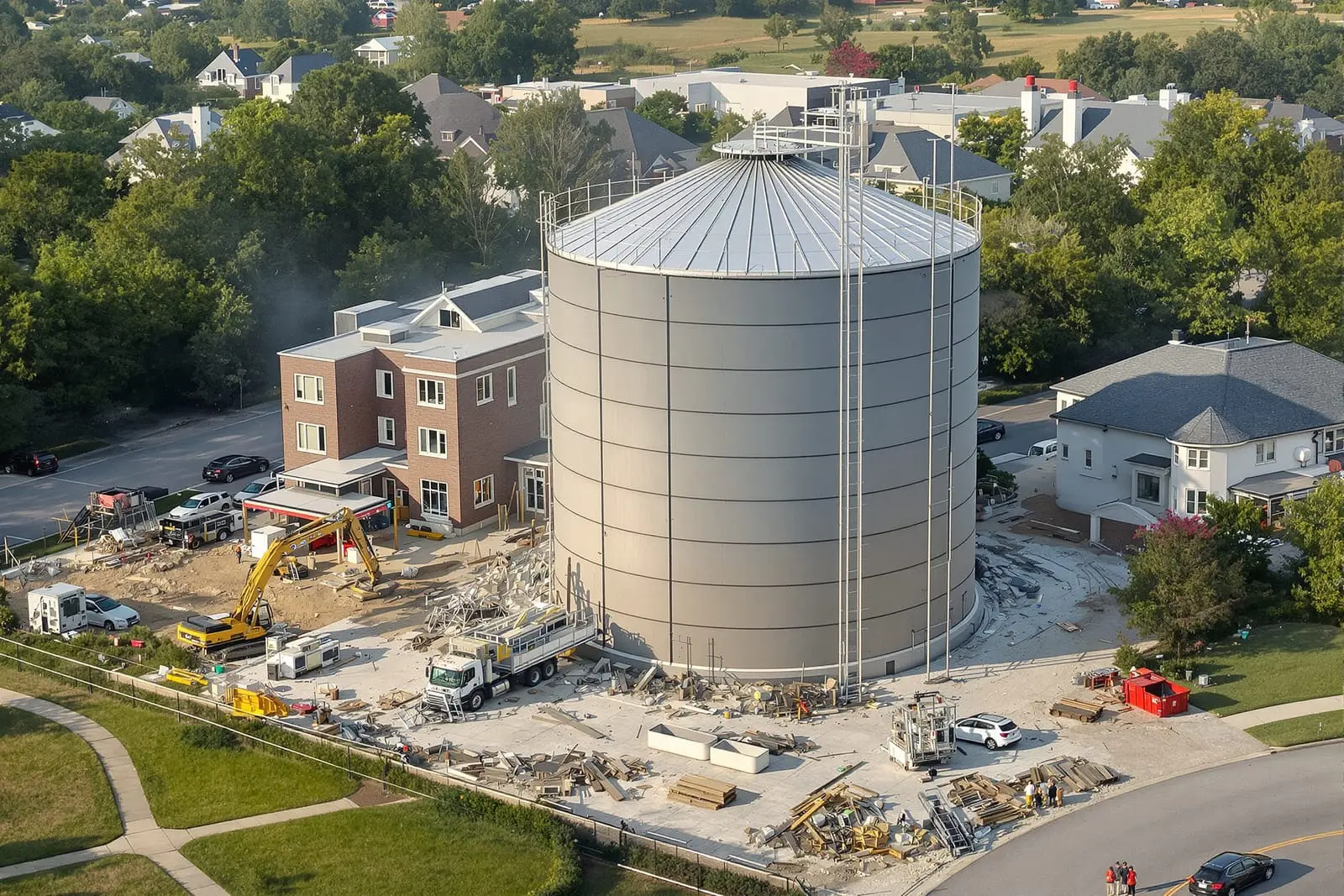
We provide tank demolition in Dallas, TX for storage tanks, silos, and stacks at industrial and agricultural sites. Our team drains, cleans, and gas frees tanks when needed, then uses cutting and rigging methods to bring them down safely. We section and remove steel and concrete, leaving pads clear for new equipment or open space.
Wrexo Demolition Dallas provides professional tank demolition throughout Dallas, TX and the surrounding area. Our licensed, insured crew delivers safe, clean, on-time work with a free estimate before anything begins. Call (469) 405-5299 or request your free quote.
Tank, Silo and Stack Demolition in Dallas, TX
Tanks, silos, and stacks are not simple tear‑downs. They are tall, heavy, and usually close to production buildings, property lines, or public streets. At Wrexo Demolition Dallas, we treat every tank demolition or stack removal as a structural project, not just a demolition job.
Most of our local calls come from bulk storage yards, food and beverage plants, asphalt and concrete plants, and older manufacturing sites that need to clear vertical structures to expand or sell the property. In North Texas, many of these units are steel or reinforced concrete, often weathered by sun, wind, and occasional hail. Corrosion and hidden weaknesses are common, so we never assume an old tank or silo is stable just because it is still standing.
Our first step is to understand what was stored in the structure. That includes fuels, chemicals, grain, cement, asphalt emulsion, or food products. The contents history affects everything, from cutting methods to disposal rules. We review any MSDS sheets or plant records you have, then build a demolition plan that keeps your operations, neighbors, and environment safe.
Wrexo Demolition Dallas focuses on practical, jobsite-tested methods. We design the demolition approach around your site constraints, the surrounding structures, and your schedule. Some projects are best handled with controlled mechanical dismantling from the top down. Others allow a carefully planned directional fall. In any case, our goal is simple: remove the tank, silo, or stack in a controlled way, avoid surprises, and leave your site ready for its next use.
How We Actually Take Tanks, Silos and Stacks Down
Safe tank demolition or stack removal is all about sequence. We start with isolation. That means disconnecting product lines, steam and utility connections, electrical, and any instrumentation. In active plants, we coordinate with your maintenance and safety teams so lockout/tagout and permit requirements are met.
Next, we deal with what is inside. For tanks, this might be product heel, sludge, or scale on the shell. For silos, usually residual grain, cement, or fly ash. For stacks, there may be soot, refractory brick, or liner materials. We arrange for pumping, vacuum truck service, or manual removal, then clean or inert the interior as needed. This is a critical step because residues can be flammable, toxic, or reactive when cut with torches.
Once the structure is empty and safe to cut, we bring in the right equipment. For most Dallas tank demolition projects, that means excavators with shears, processors, and hydraulic hammers, plus manlifts and fall protection systems. Taller silos and stacks may require a crane to lower cut sections to the ground. When space is tight around buildings or utilities, we typically perform top down dismantling, cutting the structure into manageable sections and lowering them rather than letting anything free fall.
We plan cut lines and fall directions to keep everything inside a defined work zone. For example, on a concrete silo, we might saw or hammer openings in the wall to control how the shell weakens, then reduce it in vertical sections. On a steel tank with room to lay down, we may cut a wedge, pull with an excavator so it falls into a clear area, then process the steel on the ground. Every method is engineered to match the structure type, height, and surrounding risks, not just what is fastest.
Throughout the work, we manage dust, noise, and vibration. Cutting and breaking concrete silos in North Texas summer heat creates fine dust that travels if unchecked. We use water spray, misting, and staged demolition so dust stays on your property and out of neighboring areas.
Safety, Environmental Controls and Hazard Management
Tall tank, silo, and stack demolition has three big risk categories: structural collapse, fall hazards, and environmental exposure. Wrexo Demolition Dallas addresses all three before we bring equipment onsite.
For structural risks, we perform a site-specific assessment. We look for lean, bulges, severe rust, missing bolts, concrete spalls, and previous modifications. Older facilities in Dallas often have undocumented repairs or partial demolition work. We treat those as unknowns and avoid standing or placing loads under suspect sections. When needed, we bring in temporary bracing or change from a partial cut plan to a more conservative top down dismantle.
Fall protection is mandatory for our crews at height. When we access the top of a tank or stack, we use manlifts or scaffolding where possible. If we must climb existing ladders, they are inspected and sometimes supplemented with independent lifelines and anchor points. We work in small, coordinated teams so no one is ever working alone up high.
Environmental controls depend heavily on what the structure handled in the past. Tanks that stored fuel, solvents, or chemical blends can have vapors trapped in sludge or scale. Before hot work, we may do gas testing, forced ventilation, or switch to cold cutting methods like shears or saws to avoid ignition. If the structure is part of an older plant, we also consider asbestos in stack linings, lead-based coatings, or PCB-containing equipment nearby. When we see those red flags, we incorporate abatement by licensed specialists into the schedule instead of working around hazards.
We also pay attention to stormwater and soil protection. North Texas clay soils can quickly turn demolition debris into a runoff problem during storms. We set up containment, silt fence, and organized debris piles to keep rust flakes, soot, and concrete fines from leaving your site. Proper documentation of waste streams is part of the package so you have records for future audits or property transactions.
What Drives Cost and Schedule for Tank Demolition in Dallas
Tank, silo, and stack demolition pricing is not one-size-fits-all. Wrexo Demolition Dallas builds each quote around a few key factors so you know why the number is what it is.
Height and access are usually the first cost drivers. A short ground-level tank in an open yard costs far less per ton to remove than a 180 foot stack beside an operating boiler house. Tall, slender structures require more planning, more fall protection, and often cranes or specialized equipment, which adds to both cost and schedule.
The former contents of the structure are the next big factor. Tanks that stored clean water or benign food-grade products are relatively straightforward. Tanks that held heavy fuels, acids, or unknown blends require more testing, more cleaning, and more careful cutting. Disposal fees for contaminated residues and liners can dwarf the actual demolition cost on some projects. Having accurate product history and lab data, when possible, helps us refine the price and avoid large contingencies.
Site conditions in Dallas also matter. If we must work inside a tight industrial yard near active truck traffic, rail spurs, or overhead power, we may need spotters, traffic control, and shorter daily work windows. If your plant shuts down during certain weekends or nights, we can schedule the loudest work then, but off-hours labor and lighting can affect the budget.
Scrap value is sometimes part of the equation. Heavier carbon steel from large storage tanks can offset a portion of the demolition cost. However, mixed materials like concrete silos with minimal rebar, or stacks with refractory lining, usually generate more disposal cost than salvage value. In every quote, we show you how these factors play in so you can see where options exist, for example cutting a steel tank into larger sections to maximize scrap efficiency if your site allows it.
Schedule depends on permit timing, plant coordination, and how much prep work is needed. A simple tank in an open field may be finished in a few days, while a cluster of silos tied into conveyors and catwalks can take several weeks of staged work to keep your facility functioning.
What Dallas Property Owners Should Know Before Hiring
Before you hire anyone for tank demolition or stack removal, gather a few key pieces of information. First, collect any drawings, photos, or basic measurements of your tanks, silos, and stacks. Even rough heights, diameters, and wall materials (steel vs concrete) help us design a more precise plan. Second, pull whatever records you have on contents, coatings, and any previous repairs. These do not have to be perfect, they just help avoid surprises.
Ask your potential contractor exactly how they plan to bring the structure down. If the answer is simply, we will knock it over, without an explanation of cut points, fall direction, and protection for nearby buildings and utilities, you should be cautious. A proper plan should cover access, sequence, fall protection, debris handling, and emergency contingencies.
In Dallas, check that your demolition contractor understands local permitting and utility coordination. Even private industrial sites often need notifications for dust, waste hauling, and overhead line work. Wrexo Demolition Dallas regularly coordinates with city departments, private utility locators, and plant EHS staff, and we build that time into the schedule instead of assuming it away.
You should also clarify what final condition you need. Some owners want only the tank, silo, or stack gone above grade, with foundations left for later. Others want full removal, including ringwalls, piers, or deep pedestals, and backfilling to future building specs. The level of restoration affects both cost and downtime for your site.
Finally, insist on clear communication throughout the job. On our projects, you will know which days involve loud work, crane picks, or road closures on your property. You will know how scrap is handled and when the last load leaves. When the work is complete, Wrexo Demolition Dallas provides closeout documentation that can support property sales, refinancing, or internal audits, showing that your tanks, silos, and stacks were removed safely and in compliance with regulations.
“
Professional tank, silo and stack demolition, done right the first time, quality materials, honest pricing, and results that last.
Wrexo Demolition Dallas
Tank, Silo and Stack Demolition Across Our Service Area